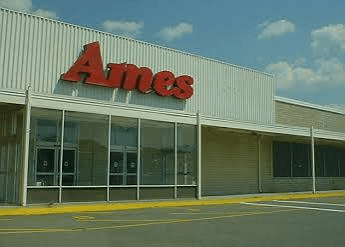

Ames Department Stores was once a familiar sight in small towns across the northeastern United States. For many people, it was the go-to spot for clothing, housewares, and everyday basics. But today, the Ames name is circulating online again — and a lot of people are confused about what’s real.
Is Ames still operating? Is it coming back? And what should you make of the 2026 reopening claims spreading on social media?
Here’s a straight answer to all of it, based on documented facts and credible reporting.
Ames Already Went Out of Business — Here’s When and How
The short answer is simple: Ames went out of business in 2002. It is not currently operating any stores, and it has not been since then.
Ames Department Stores was a regional discount chain headquartered in Rocky Hill, Connecticut. It served customers across multiple states, particularly in smaller communities that didn’t have access to larger national retailers.
In 2001, the company filed for Chapter 11 bankruptcy protection. That’s the kind of bankruptcy that allows a business to keep operating while it restructures its debts. But things did not improve.
In August 2002, Ames converted that filing to a Chapter 7 bankruptcy — which is a completely different situation. Chapter 7 means full liquidation. No restructuring, no second chance. Just a wind-down of everything.
A liquidator was brought in to run going-out-of-business sales across all 327 stores. Those sales lasted roughly 10 weeks. When they were done, the stores closed permanently. Approximately 21,500 employees lost their jobs. The original Ames retail operation ceased to exist.
Ames Had Financial Problems Long Before 2002
The 2002 closure wasn’t sudden. Ames had been struggling for years, and the warning signs went back more than a decade.
In 1990, Ames filed for bankruptcy and closed 221 stores across 16 states. That round of closures resulted in roughly 17,500 layoffs. It was a dramatic downsizing, but the company managed to survive and continue operating in a reduced form.
Then in 1992, Ames announced another round of closures — 60 more stores — as part of an ongoing Chapter 11 reorganization plan. That cost an additional 3,500 jobs.
So by the time 2001 arrived, Ames was already a chain that had been through serious financial distress twice before. The second bankruptcy filing in 2001 was its final one. This time, there was no path back.
The combination of heavy debt, intense competition from larger national discounters, and challenges from acquisitions ultimately made the company impossible to save.
Chapter 11 vs. Chapter 7 — Why the Difference Matters
A lot of the confusion around Ames comes from not understanding the difference between the two types of bankruptcy it went through. It’s worth spelling this out clearly.
Chapter 11 is a reorganization bankruptcy. A company keeps running while it works out a plan to repay creditors and cut costs. The goal is to survive in some form. Ames initially filed under Chapter 11 in 2001.
Chapter 7 is liquidation bankruptcy. There is no reorganization. The company’s assets are sold off, operations stop completely, and the business dissolves. Ames converted to Chapter 7 in 2002.
That conversion is the critical detail. Because Ames went through Chapter 7 — not just Chapter 11 — the original operating company was permanently dissolved. There were no stores left, no employees, no ongoing business of any kind.
This also means that any future business using the Ames name would not be a continuation of the original company. It would be an entirely new legal entity that purchased or licensed the brand name. That’s a meaningful distinction, especially when evaluating comeback claims.
The 2026 Ames Comeback Claims — What Is Actually Being Said
Around 2022 and 2023, claims started circulating online that Ames was coming back. The story picked up real traction, particularly in communities that used to have Ames locations.
According to these reports, a company called Silver Knight Group had acquired the Ames brand and was planning to reopen stores. An initial reopening date of spring 2023 was announced. That date came and went with no stores opening.
The timeline was then pushed to 2026. The claims included plans for 35 department stores and seven distribution warehouses. A spokesperson named “Shannon de Molyneux,” reportedly connected to an entity called the “Moline and theolyneux Group,” was cited in some reports.
The story spread quickly. For people who grew up shopping at Ames, the idea of a comeback was genuinely appealing. That emotional connection helped the claims travel far on social media.
Why Investigators Found No Evidence to Support the Claims
Local and regional journalists did what they’re supposed to do — they tried to verify the story. What they found was troubling.
ABC27 reported that as of their investigation, there were no reports of store renovations, new buildings being constructed, or any concrete signs of actual Ames store openings anywhere.
The Providence Journal went further. Their reporters tried to verify the existence of the companies and individuals behind the comeback claims. They searched public records, state corporate registries, and other sources. They could not find evidence that “Moline and theolyneux Group” or the spokesperson “Shannon de Molyneux” actually exist.
No government filings. No commercial leases. No building permits. No independent confirmation of any kind.
The conclusion from that reporting was direct: the comeback claims are based on sources that are easy to fabricate and are not backed by any public documentation.
This doesn’t mean it’s appropriate to call it a proven scam without more information. But it does mean there is currently no credible evidence that any real Ames reopening is happening — in 2026 or otherwise.
What This Means for Shoppers and Communities
If you grew up in a town that had an Ames, the idea of it coming back probably sounds like good news. More local retail, more jobs — that matters, especially in smaller communities that have seen stores close over the years.
But that’s exactly why unverified comeback stories can do real harm. People make plans based on expectations. Communities might pass on other economic development opportunities while waiting for something that may never arrive.
Understanding the difference between a genuine business announcement and an unverified claim protects you from misplaced expectations. It also helps you push back when something doesn’t add up.
For business coverage that helps you make sense of stories like this one, Lead Business Mag covers real developments with the same direct, fact-based approach.
How to Verify Whether Any New Ames Store Is Actually Opening Near You
If you see claims that an Ames is coming to your area, here are practical steps to check whether it’s real before you believe it.
- Check your state’s corporate registry. Any legitimate business operating in your state needs to be registered. Search for “Silver Knight Group” or any related entity by name. If it doesn’t show up, that’s a red flag.
- Look for local building permits. Opening 35 department stores requires construction, renovation, and permits. Your local city or county government publishes permit records. No permits, no stores.
- Search for commercial real estate activity. Retail stores need leases. Commercial real estate brokers and local news often cover significant lease signings in a market. Check whether any credible real estate source has mentioned Ames signing leases anywhere.
- Read local news, not just social media. Local reporters can physically visit a location and check what’s actually happening. If your local outlet hasn’t confirmed any Ames activity, be skeptical of what you’re reading online.
- Look for physical evidence. Construction, signage, job postings, supplier announcements — real store openings create a paper trail. If none of that exists for your area, the claim probably isn’t real yet.
The Bottom Line on Ames
The original Ames Department Stores went out of business in 2002. That is not in dispute. The company filed for Chapter 7 liquidation, closed all 327 stores, laid off approximately 21,500 workers, and permanently ceased operations.
As for the comeback claims: as of the most recent credible reporting, no independent evidence supports the idea that Ames is genuinely reopening. No verified corporate entities, no store construction, no confirmed leases, and no public documentation have surfaced to back up the 2026 reopening narrative.
That could change. Someone could genuinely acquire the Ames brand name and open new stores under it. But if and when that happens, it will be a new company — not the original Ames — and it will leave a verifiable trail of corporate filings, leases, and construction activity.
Until that evidence exists, treat the Ames comeback story as unverified. Don’t make purchasing decisions, career plans, or business assumptions based on claims that no journalist has been able to confirm.
Also Read this: