
If you’ve seen headlines about R.R. Donnelley plant closures and mass layoffs, it’s easy to assume the company is in its final days. Facilities shutting down, hundreds of workers losing jobs, local news coverage — it paints a grim picture. But the reality is more complicated than those headlines suggest.
This article breaks down the actual status of RRD in 2025, why the closure rumors keep circulating, what those plant shutdowns really mean, and how the company’s business model has changed over time.
R.R. Donnelley Is Still Open — What the Numbers Show
Let’s start with the straightforward answer: R.R. Donnelley has not filed for bankruptcy and has not announced a full shutdown as of 2025 or 2026.
The company reported revenue of approximately $5.29 to $5.37 billion in recent years, with positive net income. It employs more than 35,000 people worldwide and continues to serve major Fortune 500 clients across multiple industries.
RRD is a private company, owned by Chatham Asset Management, and headquartered in Chicago. It continues to ship products, invoice clients, and run operations across dozens of facilities. No credible evidence of a bankruptcy filing or debt default exists as of mid-2025.
That doesn’t mean the company has no challenges. It does. But “challenging” and “going out of business” are very different things.
Why So Many People Think RRD Is Shutting Down
The confusion comes from several places, and none of them are unreasonable.
Plant Closures Are Making Local News
RRD has closed facilities across Indiana, New Jersey, Iowa, Georgia, Tennessee, and Pennsylvania in recent years. Each closure generates local headlines and leaves real people without jobs.
When a plant in your city closes and 96 or 201 workers are laid off, it feels like the company is collapsing — even if that location is one of more than 100 facilities the company operates. The local impact is real and serious, but it doesn’t reflect the corporate picture.
Specific examples include:
- Seymour, Indiana — 96 jobs lost when the location closed in spring 2025
- Plainfield, Indiana — 79 workers laid off after RRD closed that plant
- West Caldwell, New Jersey — 201 employees laid off, one of the largest single layoff events in the state in 2024
The Name “Donnelley” Appears in an Old Bankruptcy
Search for “Donnelley bankruptcy” and you’ll likely find results about R.H. Donnelley, which filed for Chapter 11 bankruptcy in 2009. That company ran the Yellow Pages directory business. It is an entirely different entity from R.R. Donnelley, the commercial printing and business communications firm.
The shared last name causes real confusion in search results, and many readers understandably assume they’re reading about the same company.
LSC Communications Adds Another Layer of Confusion
When RRD spun off several of its legacy printing plants, those facilities became part of LSC Communications. LSC has since closed some of those plants under its own name — but local reporting sometimes still refers to them as “former Donnelley plants.” Readers see that, connect it to RRD, and the confusion compounds.
The Tennessee plant closure on Steam Plant Road is one example. The closure notice was filed by LSC Communications, not R.R. Donnelley — but the Donnelley name lingered in how people described it.
Plant Closures Are Not the Same as Corporate Failure
This is the most important distinction to understand, especially if you’re a vendor, employee, or business partner trying to make decisions based on what you’re reading.
Closing specific facilities is a standard cost-cutting and consolidation strategy in mature industries. It does not automatically mean a corporation is about to cease operations.
When RRD closed its Des Moines, Iowa plant and cut approximately 775 jobs — about 2.3% of its total workforce at the time — production wasn’t eliminated. It was moved to other existing facilities. The company cited the Iowa plant’s size, equipment age, and location as reasons for the closure. That’s a consolidation decision, not a liquidation signal.
The Lancaster County, Pennsylvania closures followed the same logic. Around 656 workers lost their jobs when those facilities shut down, but production was shifted to plants in Maple Grove, Minnesota and Warsaw, Indiana. Work continued — just in fewer, more modernized locations.
A useful comparison: think of a national retail chain closing one location while still operating hundreds of others across the country. That’s restructuring. It’s not the chain going out of business.
What R.R. Donnelley’s Business Actually Looks Like Now
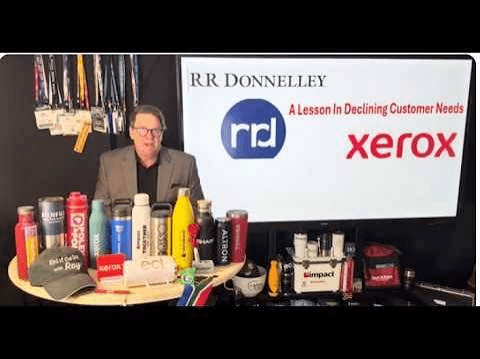
RRD was founded in 1864 as a commercial printer. That’s still part of what it does, but printing is no longer the core of its identity.
The company has shifted significantly toward logistics, fulfillment, supply chain services, digital marketing, secure mailings, and multi-channel business communications. It functions more like a business services and communications company that also prints, rather than a traditional print shop trying to outlast an industry decline.
That shift matters when you’re interpreting plant closures. Many of the facilities RRD has closed were tied to specific print products — catalogs, magazines, directories — that have seen sharp drops in demand over the past decade. Closing those plants isn’t a sign of corporate collapse. It reflects a deliberate move away from low-margin, declining print work toward higher-margin services.
Major brands still rely on RRD for regulated communications, transactional mailings, and integrated marketing campaigns. The client base hasn’t evaporated — the product mix has just changed.
The Financial Picture: Stable But Not Without Risk
RRD’s financials show a company that is profitable and generating multi-billion-dollar revenue, but not without real pressure points.
The company carries a high level of debt, which is a legitimate risk factor that analysts and industry watchers have noted. High debt in a contracting industry is worth monitoring. But as of 2025, there is no indication of missed major payments or default.
Revenue has stayed relatively stable despite the broader decline of the print industry. That stability is partly a result of the diversification strategy — the shift into logistics, digital communications, and fulfillment offsets some of the losses from traditional print work.
For anyone evaluating RRD as a vendor or business partner, the debt level is a factor worth keeping an eye on. But it’s not a sign that the company is about to shut its doors.
What Would “Going Out of Business” Actually Look Like?
It’s worth being specific here, because the phrase “going out of business” gets used loosely.
A true corporate shutdown would involve a Chapter 11 or Chapter 7 bankruptcy filing, official announcements about cessation of services, and a breakdown in client relationships at scale. None of those things are happening at R.R. Donnelley right now.
If you want to track the company’s health over time, here are the actual warning signs to watch:
- A formal bankruptcy filing or missed debt payments
- Loss of major Fortune 500 contracts with no replacements
- A public announcement from RRD or Chatham Asset Management about winding down operations
- A sharp and sustained drop in reported revenue (not a gradual decline)
None of those signals are present in the current reporting. What you do see are facility consolidations, workforce reductions at specific locations, and an ongoing business model transition — all of which are uncomfortable but not the same thing as corporate failure.
For more business news and analysis like this, Lead Business Mag covers company status updates, industry trends, and practical guidance for professionals navigating uncertain business environments.
The Bottom Line
R.R. Donnelley is not going out of business. It is restructuring, consolidating, and shifting its business model away from traditional commercial printing toward services, logistics, and digital communications.
The plant closures are real, and the job losses are significant for the communities affected. That human impact deserves to be acknowledged clearly. But a company closing specific facilities while continuing to operate globally, generate billions in revenue, and serve major clients is not a company on the verge of collapse.
If you’re an employee, vendor, or business partner, the practical advice is this: watch the official indicators, not just the local headlines. The local plant closure may be very relevant to your specific situation, but it doesn’t tell you what’s happening at the corporate level. Those are two different questions, and they need two different answers.
Read Also this: