
If you searched this question, you probably stumbled across something that looked alarming — a factory closure, a company sale, or a news story about layoffs in a town called Tecumseh. It’s easy to read one headline and assume the worst.
But the full picture is more nuanced than that. This article breaks down who Tecumseh Products Company actually is, why it looks like it might be disappearing, and what really happened. By the end, you’ll also know how to tell the difference between a company restructuring and a company shutting down — a distinction that matters more than most people realize.
What Tecumseh Products Company Actually Does
Before addressing whether Tecumseh is going out of business, it helps to know what the company does in the first place.
Tecumseh Products Company was founded in 1934 and is headquartered in Ann Arbor, Michigan. It manufactures hermetically sealed compressors, condensing units, heat pumps, and complete refrigeration systems. Its customers span residential, commercial, and industrial markets across the globe.
This is not a small or obscure operation. It’s a long-established manufacturer serving the air conditioning and refrigeration industry worldwide.
One important clarification: Tecumseh Products Company is not the same as the city of Tecumseh in Michigan, the town of Tecumseh in Ontario, or the city of Tecumseh in Oklahoma. All of those places exist, and all of them can generate confusing search results. But the company and the municipalities are entirely separate entities.
Three Events That Made People Think Tecumseh Was Shutting Down
There are three specific events that explain why this question keeps coming up. Each one looked alarming in isolation, but none of them meant the company was going under.
The Plant Closure in Tecumseh, Michigan
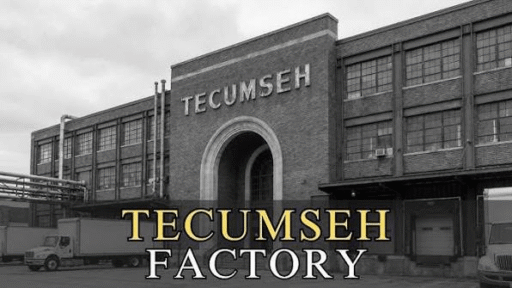
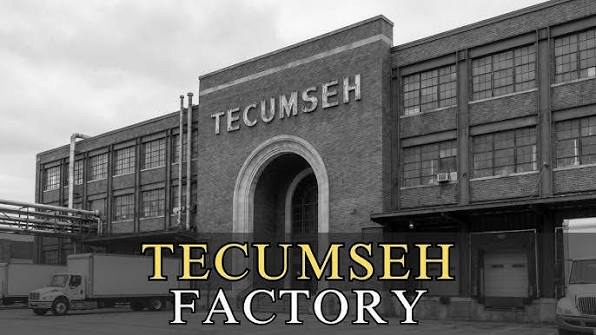
After roughly 74 years, Tecumseh Products closed its manufacturing operations in the city of Tecumseh, Michigan — the town it had helped build. The company moved that production work to other facilities in North America.
For the people living there, watching a major employer go dark feels devastating. Local news covered the exit heavily, and the framing made it sound like a death. But the company itself didn’t die. It relocated its production. That’s a meaningful distinction, even if it didn’t feel that way to the workers who lost jobs locally.
The Sale of the Engine and Power Train Division
Tecumseh sold its Engine and Power Train business to Platinum Equity LLC for $51 million in cash. The reason was straightforward: reduce debt and refocus on its core compressor business.
Think of it like a restaurant selling off its catering operation to focus on its main dining room. The name “Tecumseh” no longer appeared on engines and power train equipment, but it still appeared on compressors and refrigeration products. Selling a division is a strategic move, not a liquidation.
The Acquisition by Mueller Industries and Atlas Holdings
Tecumseh Products was acquired for $123 million by an affiliate of Mueller Industries and Atlas Holdings. The offer price was $5 per share — a 155% premium over the prior closing stock price.
Following the deal, Tecumseh became a privately held company. Its stock no longer trades on public exchanges. For anyone used to tracking it as a public company, that disappearance from the market can feel like the company vanished. It didn’t. It just stopped reporting publicly.
What the Mueller Industries Acquisition Actually Means
Acquisitions get misread all the time. People see “company sold” and assume the business is being shut down or carved up for parts. That’s not what happened here.
When Mueller Industries and Atlas Holdings bought Tecumseh, they paid a substantial premium — 155% above the stock price at the time. Buyers don’t pay that kind of premium for a company they plan to close. Premiums like that signal expected ongoing value. You pay more than market price when you believe the business is worth running.
After the deal closed, Tecumseh remained a standalone business focused on its compressor product line. The corporate structure changed. The ownership changed. But the operations continued.
The simplest way to understand it: going private under new ownership is like a business owner buying back all outside investors. The company keeps doing what it always did. It just stops filing public reports and disappears from stock listings. That’s often where the confusion starts.
PitchBook lists Atlas Holdings and Brookfield Corporation among Tecumseh’s investors, and the company’s headquarters remains at 5683 Hines Drive in Ann Arbor, Michigan — exactly where it was before the acquisition.
Tecumseh Products Is Still Operating — Here Is the Evidence
Vague reassurances aren’t useful. Here are concrete facts that confirm the company is still active.
- Corporate headquarters: Tecumseh Products maintains its offices at 5683 Hines Drive, Ann Arbor, Michigan. ZoomInfo and PitchBook both list it as an active private manufacturer in the electrical equipment and climate products space.
- India operations: Tecumseh Products India Private Limited was incorporated on January 30, 1997, and remains a registered, active non-government private company in India. Companies don’t build and maintain international subsidiaries when they’re winding down.
- European operations: Tecumseh Europe Sales and Logistics operates a UK and Ireland branch out of France. That cross-border structure reflects an active international sales and distribution network.
- Investor interest: PitchBook reports that Tecumseh has raised significant capital and attracted institutional investors including Atlas Holdings and Brookfield Corporation. Institutional investors don’t back companies they expect to disappear.
The pattern here is consistent. Active subsidiaries in multiple countries. An institutional investor base. A standing corporate address. These are not the signs of a business that has quietly shut its doors.
How to Tell the Difference Between a Restructuring and a Shutdown
Tecumseh’s story is a useful case study for anyone who wants to understand how corporate changes actually work. The language used in business news can make normal restructuring sound like failure.
Here’s a practical breakdown of the three different things that can happen to a company:
- Liquidation or bankruptcy: The company genuinely ceases operations. Assets are sold off. Customers stop receiving products or services. This is what “going out of business” actually means.
- Acquisition or going private: Ownership changes hands. The business continues under new ownership, often with the same products, employees, and locations. The stock may disappear from public markets, but the company does not.
- Plant closure or relocation: One facility closes, but operations move elsewhere. Jobs are lost in one location, which is genuinely painful for that community. But the corporate entity survives and keeps producing.
Tecumseh Products experienced all three of the non-fatal versions. It closed a local plant, sold a non-core division, and was acquired by private investors. None of those events equal a shutdown.
If you want to verify a company’s status yourself, the process is straightforward. Check the company’s own website. Search business registries in the relevant country. Look up the company on databases like PitchBook or ZoomInfo. Read past the headline — a “plant closure” story is not the same as a “company closed” story.
For more practical business analysis like this, Lead Business Mag covers real-world business topics without the corporate spin.
Final Verdict
Tecumseh Products Company is not going out of business. It closed a factory in its namesake city in Michigan. It sold a division that wasn’t part of its core focus. It was acquired by Mueller Industries and Atlas Holdings at a significant premium and became a private company.
Each of those events, taken alone and out of context, can sound like a company in trouble. Together, they describe a company that went through a significant restructuring and came out as a leaner, privately held manufacturer still operating globally in the refrigeration and air conditioning market.
The confusion is understandable. But the facts are clear. If you were looking for a compressor supplier, a former employee checking on a warranty, or just someone trying to make sense of a confusing news story — the company is still there. It just looks different than it did twenty years ago.
Read Also this: